AI automation explained: Boosting efficiency for home service owners
AI automation explained: Boosting efficiency for home service owners ! Home service owner reviews digital schedule at home desk Most home service business owners hear "AI automation" and picture robots replacing their best technicians or a sci-fi software takeover that leaves crews out of work.

Most home service business owners hear "AI automation" and picture robots replacing their best technicians or a sci-fi software takeover that leaves crews out of work. That assumption is costing businesses real money every single day. The truth is that AI automation is already helping HVAC companies cut callback rates by 60%, saving construction firms hours of administrative waste, and giving landscaping crews smarter scheduling tools. This article breaks down exactly what AI automation means for your trade, how it works in practice, and how to apply it without blowing your budget or alienating your team.
Key Takeaways
| Point | Details |
|---|---|
| AI augments human skill | Technology supports—not supplants—expert judgment and field experience. |
| Proven savings in HVAC | AI-driven diagnostics reduce callbacks and boost profitability by thousands annually. |
| Hybrid solutions work best | Combining automation with staff expertise yields the safest and most effective results. |
| Start small for success | Begin with routine tasks and scale up as you track positive outcomes. |
Understanding AI automation in home services
AI automation is not one single tool. It is a collection of technologies that work together to handle repetitive, data-heavy tasks so your skilled workers can focus on the jobs that actually need human expertise.
For home service businesses, the relevant pieces include:
- Machine learning: Software that analyzes patterns in your job data to make smarter predictions, like which equipment is likely to fail next month or which routes reduce drive time.
- Robotic process automation (RPA): Digital tools that handle rule-based tasks like invoicing, appointment confirmations, and follow-up messages without any manual input.
- AI diagnostics: Tools that read sensor data, photos, or customer descriptions to identify problems faster and more accurately than a manual review.
- Scheduling and dispatch optimization: Algorithms that assign the right technician to the right job based on skill, location, and availability in real time.
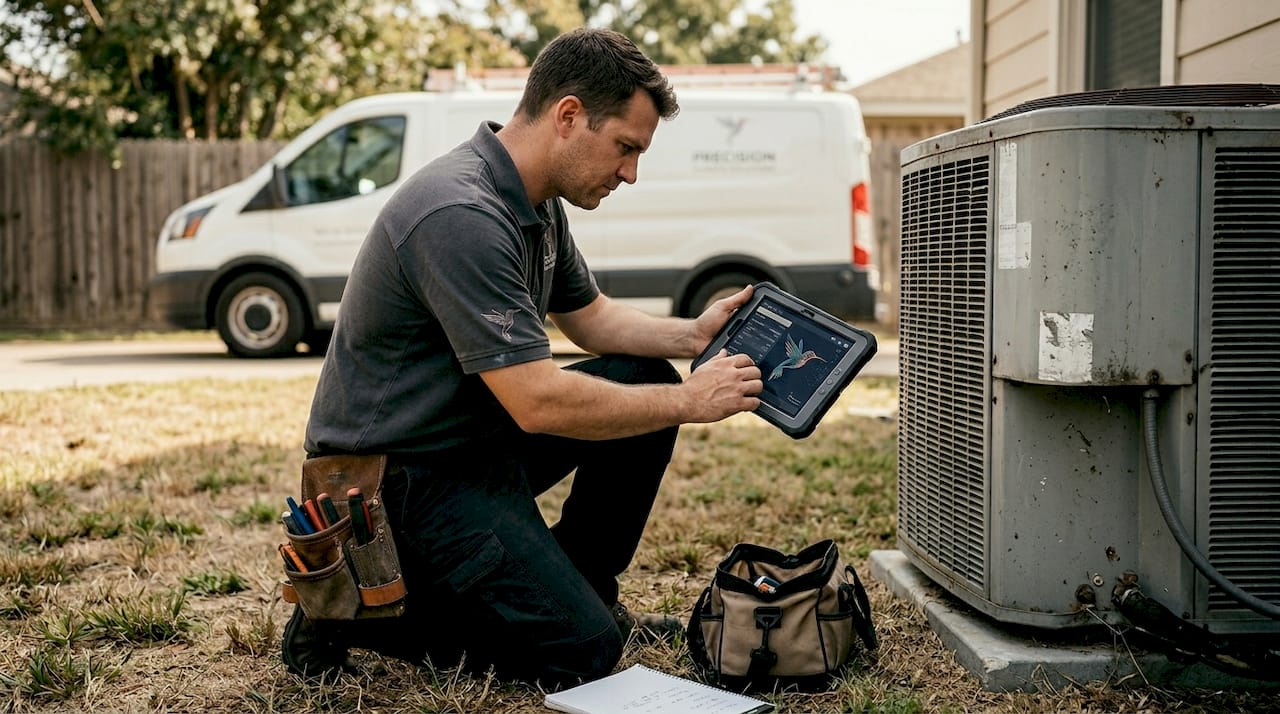
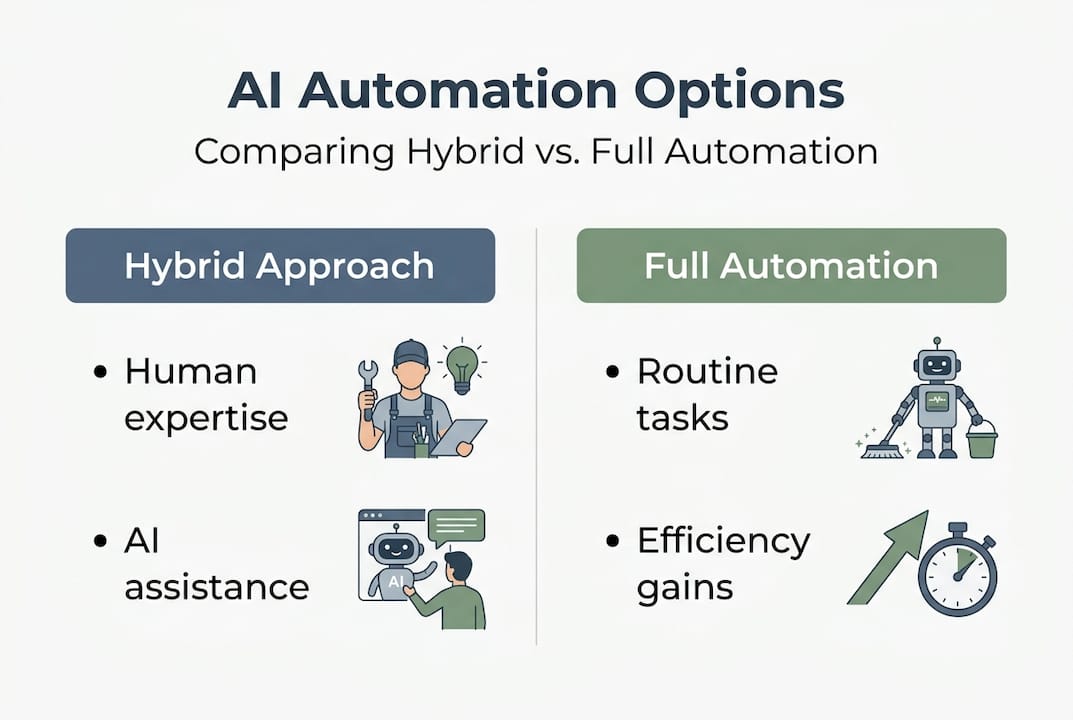
What AI cannot do is replace the judgment call your senior electrician makes when he walks into an unfamiliar panel, or the empathy your HVAC tech shows when a homeowner is frustrated about a second breakdown. As noted in research on AI's role in trades, hybrid solutions that combine RPA with AI work best because full automation creates costly errors in unstructured field environments. The goal is always augmentation, not replacement.
There is also a practical benefit to home lighting automation that mirrors what business-level AI does: it removes the mental load of managing small repetitive decisions so attention goes where it matters most.
Pro Tip: Start by identifying three tasks your office team repeats every single day. Scheduling reminders, invoice generation, and job status updates are the easiest wins. Automate those first before touching anything field-facing.
Real-world impact: AI diagnostics in HVAC
Nothing makes the case for AI automation faster than hard numbers. One of the clearest examples comes from HVAC contractors who adopted AI-powered diagnostic tools.
| Metric | Before AI | After AI |
|---|---|---|
| Callback rate | 33% | 13% |
| First-time fix rate | 67% | 91% |
| Annual savings | $0 baseline | $186,000 |
These results come from a documented HVAC callback reduction case study where AI diagnostic tools helped technicians identify root causes correctly on the first visit, rather than patching symptoms and returning multiple times. A 60% drop in callbacks is not a marginal improvement. It transforms profitability, customer satisfaction scores, and your team's daily workload all at once.
"AI doesn't replace technicians. It makes their work more accurate by giving them better information before they even open the unit."
For HVAC businesses, this means fewer wasted service calls, lower fuel costs, less overtime, and stronger reviews from customers who got the problem fixed right the first time. The same principle applies to electrical contractors who run diagnostics on panel issues and landscaping companies that use AI-driven soil sensors to plan irrigation more precisely.
The AI-powered solutions emerging in adjacent industries like security and surveillance follow the same pattern: smarter data leads to fewer field errors and faster resolution times. That trend is crossing into every home service vertical faster than most business owners realize.
Choosing the right approach: Hybrid vs. full automation
Here is where many business owners make an expensive mistake. They either ignore AI entirely or try to automate everything at once. Both extremes hurt the business.
| Factor | Full automation | Hybrid (AI + human) |
|---|---|---|
| Efficiency on routine tasks | Very high | High |
| Accuracy on complex field jobs | Low to moderate | High |
| Flexibility for unusual situations | Poor | Strong |
| Staff resistance | High | Moderate |
| Implementation cost | High | Scalable |
Full automation works well for purely digital tasks like billing, CRM updates, and appointment reminders. But for construction site assessments, electrical troubleshooting, or landscape redesign consultations, the hybrid approach outperforms every time. Human judgment paired with AI data produces results that neither can achieve alone.
Here is a practical decision process for choosing your approach:
- List your tasks by structure: Tasks with clear rules and data inputs are automation candidates. Tasks requiring judgment, creativity, or personal communication need human involvement.
- Rank by risk: Low-risk administrative tasks go first. High-stakes field decisions stay human-led, with AI support only.
- Map the workflow: Understand where a task starts, what decisions happen in the middle, and where it ends. This tells you exactly where automation fits and where it does not.
- Check vendor track records: Look for vendors who have worked with similar-sized businesses in your trade, not just generic software companies pitching broad solutions.
- Build in human review checkpoints: Even in a well-automated workflow, a team member should review outputs at key stages before action is taken.
The cleaning business automation space has gone through this same learning curve. Businesses that layered automation gradually outperformed those that tried to flip the switch overnight.
Pro Tip: Before automating any process your field team touches, sit down with those workers and ask what frustrates them most about the current workflow. Their answers will tell you exactly where automation adds value and where it will create friction.
Getting started with AI automation: Practical steps
Knowing automation works is one thing. Starting the process without derailing your operations is another. Here is how to do it without chaos.
- Audit your current operations: List every repetitive task your team performs weekly. Estimate how much time each takes. The highest-time, lowest-skill tasks are your first automation targets.
- Pick one workflow to pilot: Do not try to automate scheduling, billing, customer follow-up, and diagnostics simultaneously. Choose the workflow with the clearest rules and the least risk.
- Select a vendor with proven results: Look for case studies in your specific trade. Generic automation platforms rarely account for the nuances of field service operations.
- Set measurable goals before you start: If you are automating job scheduling, define what success looks like: fewer double bookings, faster dispatch, or reduced phone time for office staff.
- Run the pilot with a small team: Let two or three team members use the tool for 30 days before rolling it out company-wide. Their feedback will catch problems early.
- Track your metrics from day one: The callback rate improvements documented in HVAC case studies only became visible because those businesses tracked baseline data before the pilot started.
Common pitfalls to avoid:
- Over-automating field decisions: Routing an alert to a technician is smart. Letting software decide whether to replace major equipment without human sign-off is not.
- Skipping staff training: Your team will resist tools they do not understand. Budget training time as seriously as you budget the software cost.
- Ignoring customer-facing impacts: Automated follow-up messages that feel cold or generic can damage relationships you spent years building.
- Underestimating integration complexity: Most home service businesses run on multiple platforms. Make sure your automation tools connect properly with your existing software stack.
For inspiration on what is possible, look at how AI tools are reshaping security technology. The pattern of gradual, targeted implementation followed by measured expansion is consistent across every service industry that has adopted it successfully.
The uncomfortable truth most experts won't tell you about AI automation
Everyone promoting AI automation wants to show you the success stories. The 60% reduction in callbacks. The six-figure savings. The faster dispatch. And those results are real. But there is a side of this conversation that rarely gets airtime.
AI performs brilliantly when your underlying processes are already clean. When your job data is accurate, your workflows are documented, and your team follows consistent procedures, AI multiplies all of that efficiency. When your operations are chaotic, AI automation amplifies the chaos. It just does it faster and at scale.
The businesses that struggle most with AI adoption are not the ones that pick the wrong software. They are the ones that expected the software to fix problems that were actually process problems, communication problems, or leadership problems. Technology does not solve a disorganized dispatch system. It accelerates it.
The most efficient home service businesses we have seen blend human expertise with AI support in a very deliberate way: they use AI to surface information faster, but they trust their experienced technicians to act on that information. That combination is what actually produces the numbers people brag about.
Our strong advice: invest as much in change management and training as you invest in the technology itself. The software is the easy part. Getting your team to use it consistently, trust it appropriately, and flag when it gets things wrong is the work that determines whether your AI investment pays off.
Next steps: Transform your operations with expert AI strategy
To take full advantage of AI automation, expert advice and industry-tailored strategies make a measurable difference. At sharonjerman.com, we work directly with construction, landscaping, HVAC, and electrical business owners to design automation strategies that match your actual operations. That means custom chatbots that handle after-hours inquiries, voice AI that qualifies leads before your team ever picks up the phone, and content automations that keep your marketing running without adding to your workload. No generic templates. No one-size-fits-all software recommendations. Just practical solutions built for the specific demands of field service businesses ready to grow.
Frequently asked questions
Can AI automation completely replace technicians in home services?
AI augments human workers but cannot fully replace the expert judgment and empathy needed for most service jobs, especially in unstructured field environments.
What quantifiable results can HVAC businesses expect from AI automation?
HVAC companies have seen callback rates drop 60%, first-time fix rates jump from 67% to 91%, and annual savings reach $186,000.
How should home service business owners start implementing AI automation?
Begin by automating low-risk, repetitive tasks and work with reputable vendors to pilot AI solutions in a small team before any large-scale rollout.
What are common mistakes when automating home service operations?
Businesses often over-automate complex field tasks and skip staff training, which leads to costly errors and team-wide resistance that stalls adoption entirely.